
Are you looking to build muscle without the use of weights? It may seem challenging, but with the right exercises and techniques, you can still achieve your fitness goals. By focusing on bodyweight exercises such as push-ups, squats, and planks, along with incorporating resistance bands and other equipment-free workouts, you can effectively build strength and muscle mass. This article will provide you with tips and strategies on how to build muscle without weights, so get ready to achieve your desired results through alternative methods. Have you ever wanted to build muscle without using traditional weights or gym equipment? Maybe you don’t have access to a gym, or you prefer working out at home. Whatever your reasons may be, it is entirely possible to build muscle without weights. In this article, we will explore different exercises, techniques, and strategies you can use to strengthen and tone your muscles without the need for expensive equipment. So, let’s dive in and learn how you can achieve your fitness goals without lifting a single dumbbell.
The Science Behind Building Muscle
Building muscle without weights might seem like a daunting task, but it is entirely feasible with the right knowledge and approach. To understand how muscles grow and strengthen, we need to delve into the science behind muscle building.
When you engage in resistance training, whether with weights or bodyweight exercises, you create microscopic tears in your muscle fibers. These tears signal your body to repair and rebuild the damaged muscle tissue, ultimately leading to muscle growth and strength gains. This process is known as muscle hypertrophy.
So, how can you achieve muscle hypertrophy without traditional weights? By implementing creative and effective bodyweight exercises and techniques that target your muscles and challenge them in new ways.
Understanding Muscle Groups
Before we jump into specific exercises and techniques, it’s essential to understand the major muscle groups in your body. By targeting these muscle groups effectively, you can build strength and muscle definition without weights.
- Upper Body: Includes muscles such as the chest (pectoralis major), back (latissimus dorsi), shoulders (deltoids), biceps, and triceps.
- Lower Body: Comprises muscles like the quadriceps, hamstrings, glutes, and calves.
- Core: Involves muscles in your abdomen, obliques, and lower back, which provide stability and support for your entire body.
By incorporating exercises that target these muscle groups, you can achieve a balanced and comprehensive workout routine that promotes muscle growth and overall strength.
Bodyweight Exercises to Build Muscle
Now that you have a basic understanding of muscle building principles let’s explore bodyweight exercises that can help you build muscle without weights. These exercises target different muscle groups and can be modified to suit your fitness level and goals.
Push-Ups
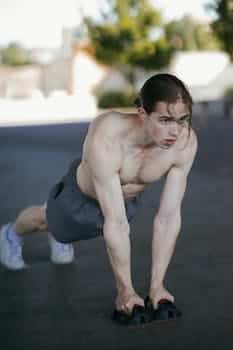
Push-ups are a classic bodyweight exercise that primarily targets the chest, shoulders, and triceps. To perform a push-up:
- Start in a high plank position with your hands slightly wider than shoulder-width apart.
- Lower your body by bending your elbows until your chest nearly touches the ground.
- Push through your palms to extend your arms and return to the starting position.
You can modify push-ups by performing them on your knees or elevating your hands on a bench or step to increase or decrease resistance. Aim for 3 sets of 10-15 repetitions to build muscle and strength in your upper body.
Bodyweight Squats
Bodyweight squats are excellent for targeting the quadriceps, hamstrings, and glutes. To perform a bodyweight squat:
- Stand with your feet hip-width apart and your hands by your sides.
- Lower your body by bending your knees and pushing your hips back as if sitting into a chair.
- Drive through your heels to return to the starting position.
You can make bodyweight squats more challenging by adding a jump at the top of the movement or holding a weight (such as a backpack filled with books) in front of your chest. Aim for 3 sets of 15-20 repetitions to strengthen your lower body muscles.
Pull-Ups
Pull-ups are a fantastic bodyweight exercise for targeting the back, biceps, and forearms. If you don’t have access to a pull-up bar, you can perform modified versions using a sturdy table or doorframe pull-up bar. To perform a pull-up:
- Hang from a pull-up bar with your hands slightly wider than shoulder-width apart.
- Engage your back muscles and pull your body up until your chin clears the bar.
- Lower your body with control back to the starting position.
For beginners, you can start with assisted pull-ups using resistance bands or a chair for support. Aim for 3 sets of 5-10 repetitions to build strength and muscle definition in your upper body.
Planks
Planks are an excellent core-strengthening exercise that engages multiple muscle groups, including your abdominals, obliques, and lower back. To perform a plank:
- Start in a high plank position with your hands directly under your shoulders and your body in a straight line from head to heels.
- Engage your core muscles and hold this position for 30-60 seconds, focusing on maintaining proper form.
- Lower your knees to the ground if needed to reduce the intensity.
You can increase the difficulty of planks by lifting one arm or leg off the ground or performing side planks to target your obliques. Aim to hold a plank for 3 sets of 30-60 seconds to improve core strength and stability.
Progressive Overload for Muscle Growth
Progressive overload is a crucial principle in muscle building that involves gradually increasing the demand placed on your muscles to stimulate growth and strength gains. While traditional weight training involves adding more weight to resistance exercises, you can still achieve progressive overload with bodyweight exercises.
Tempo Training
Tempo training involves controlling the speed of each repetition to increase time under tension and challenge your muscles in new ways. You can adjust the tempo of bodyweight exercises by incorporating a pause at the bottom, middle, or top of the movement, or by slowing down the eccentric (lowering) and concentric (raising) phases of the exercise.
For example, you can perform push-ups with a 2-second descent, a 1-second pause at the bottom, and a 2-second ascent to increase the intensity and promote muscle growth. By manipulating the tempo of your bodyweight exercises, you can effectively apply progressive overload without the need for external weights.
Variations and Progressions
Another way to implement progressive overload in bodyweight training is by progressing to more advanced variations of exercises as you build strength and muscular endurance. For example, you can start with knee push-ups and gradually work your way up to standard push-ups, then diamond push-ups, and eventually one-arm push-ups.
Similarly, you can progress from standard bodyweight squats to jumping squats, pistol squats, or Bulgarian split squats to challenge your lower body muscles in different ways. By continually seeking out new variations and progressions of bodyweight exercises, you can ensure that your muscles are constantly adapting and growing stronger over time.
Volume and Intensity
Increasing the volume and intensity of your bodyweight workouts is another effective way to apply progressive overload and promote muscle growth. You can increase volume by adding more sets, repetitions, or exercises to your routine, gradually increasing the workload on your muscles.
Additionally, you can increase intensity by shortening rest periods between sets, performing exercises at a faster pace, or incorporating supersets and circuits to keep your heart rate elevated and challenge your muscles more effectively. By manipulating both volume and intensity in your bodyweight workouts, you can stimulate muscle hypertrophy and achieve your strength and fitness goals without traditional weights.
Nutrition for Muscle Building
In addition to incorporating effective bodyweight exercises and applying progressive overload, proper nutrition plays a crucial role in muscle building and recovery. To maximize muscle growth without weights, consider the following nutrition tips:
Protein Intake
Protein is essential for muscle repair and growth, as it provides the building blocks (amino acids) necessary for synthesizing new muscle tissue. Aim to consume an adequate amount of protein from quality sources such as lean meats, poultry, fish, eggs, dairy, legumes, and plant-based sources like tofu and tempeh.
Depending on your activity level and fitness goals, aim to consume around 0.8-1 gram of protein per pound of body weight per day to support muscle building and recovery. You can incorporate protein-rich snacks like Greek yogurt, protein shakes, nuts, and seeds into your diet to meet your daily protein needs effectively.
Carbohydrates for Energy
Carbohydrates are your body’s primary source of energy, especially during intense workouts and resistance training. Consuming an adequate amount of carbohydrates before and after your workouts can replenish glycogen stores, provide energy for exercise, and support muscle recovery.
Focus on consuming complex carbohydrates like whole grains, fruits, vegetables, and legumes to sustain energy levels and promote muscle glycogen replenishment. Incorporating carbohydrates into your pre and post-workout meals can optimize exercise performance and recovery, helping you build muscle effectively without weights.
Healthy Fats and Micronutrients
While protein and carbohydrates are crucial for muscle building, don’t overlook the importance of healthy fats and micronutrients in your diet. Essential fatty acids like omega-3s play a role in inflammation regulation and cellular health, while vitamins and minerals support various physiological functions that contribute to muscle growth and overall health.
Include sources of healthy fats like avocados, nuts, seeds, and fatty fish in your diet to support hormone production and reduce inflammation. Additionally, eat a variety of fruits and vegetables to ensure you’re getting essential vitamins and minerals that aid in muscle recovery and performance.

Recovery and Rest for Muscle Growth
Muscle recovery and rest are often overlooked but essential components of effective muscle building without weights. When you engage in resistance training or intense workouts, you create stress and micro-tears in your muscles that need time to repair and rebuild. By prioritizing recovery and rest, you can optimize muscle growth and performance over time.
Sleep Quality and Quantity
Sleep is crucial for muscle recovery, hormone regulation, and overall health. Aim to get 7-9 hours of high-quality sleep per night to facilitate muscle repair and growth. During deep sleep stages, your body releases growth hormone, which plays a vital role in tissue repair and muscle growth.
Establishing a consistent sleep schedule, creating a relaxing bedtime routine, and optimizing your sleep environment (e.g., dark room, comfortable mattress, cool temperature) can improve sleep quality and support muscle building efforts. Prioritize sleep as a fundamental pillar of your muscle-building journey without weights.
Active Recovery and Mobility
In addition to adequate sleep, incorporating active recovery and mobility exercises into your routine can enhance muscle repair and reduce the risk of injury. Activities like yoga, Pilates, stretching, and foam rolling can improve flexibility, mobility, and blood flow to your muscles, promoting recovery and preventing stiffness.
Consider adding 1-2 days of active recovery activities to your weekly workout routine to give your muscles a break from intense training while still promoting blood circulation and mobility. By balancing challenging workouts with active recovery sessions, you can support muscle growth and longevity without weights.
Hydration and Nutrition
Proper hydration and nutrition are essential for muscle recovery and performance. Drinking an adequate amount of water throughout the day can prevent dehydration, promote nutrient transport to your muscles, and aid in metabolic processes that support muscle growth.
Additionally, refueling with a balanced post-workout meal that includes protein, carbohydrates, and healthy fats can replenish glycogen stores, repair muscle tissue, and support recovery. Focus on consuming a meal or snack within 30-60 minutes of finishing your workout to maximize muscle repair and growth.
Consistency and Persistence
Building muscle without weights requires consistency, patience, and persistence. While you may not see significant results overnight, staying committed to your workout routine, nutrition plan, and recovery efforts can lead to gradual and sustainable muscle growth over time.
By incorporating challenging bodyweight exercises, applying progressive overload, prioritizing proper nutrition and recovery, and staying consistent in your efforts, you can achieve your muscle-building goals without the need for traditional weights or gym equipment. Remember that progress takes time, so celebrate small victories along the way and stay focused on your long-term fitness journey.
Building muscle without weights is entirely achievable with the right knowledge, approach, and dedication. By understanding the science behind muscle building, incorporating effective bodyweight exercises, applying progressive overload, optimizing nutrition and recovery, and maintaining consistency in your efforts, you can strengthen and tone your muscles in the comfort of your own home. Embrace the challenge, stay motivated, and enjoy the process of transforming your body and improving your overall health and fitness. You have the power to build muscle without weights – now, let’s get started on your fitness journey!
Related Topics About How to Build Muscle Without Weights
Can You Actually Build Muscle Without Weights,
Can You Build Muscle Without Weights,
How To Build Calf Muscle Without Weights,
How To Build Chest Muscle Without Weights,
How To Build Muscle Gym Routine,
How To Build Muscle In Arms Without Weights,
How To Build Muscle In Legs Without Weights,
How To Build Muscle On Arms Without Weights,
How To Build Muscle With Dumbbells At Home Pdf,
How To Build Muscle With Dumbbells Reddit,
How To Build Muscle Without Gym Equipment,
How To Build Muscle Without Gym Reddit,
How To Build Muscle Without Weights,
How To Build Muscle Without Weights At Home,
How To Build Shoulder Muscle Without Weights,
How To Build The Chest Muscles Without Weights,
How To Build Tricep Muscle Without Weights,
How To Build Up Muscle Without Weights,
ow To Gain Muscle With Weights,
How To Gain Muscle Without Using Weights